
Frozen Shoulder Treatment in Indore – Expert Orthopedic Care by Dr. Vikas Jain
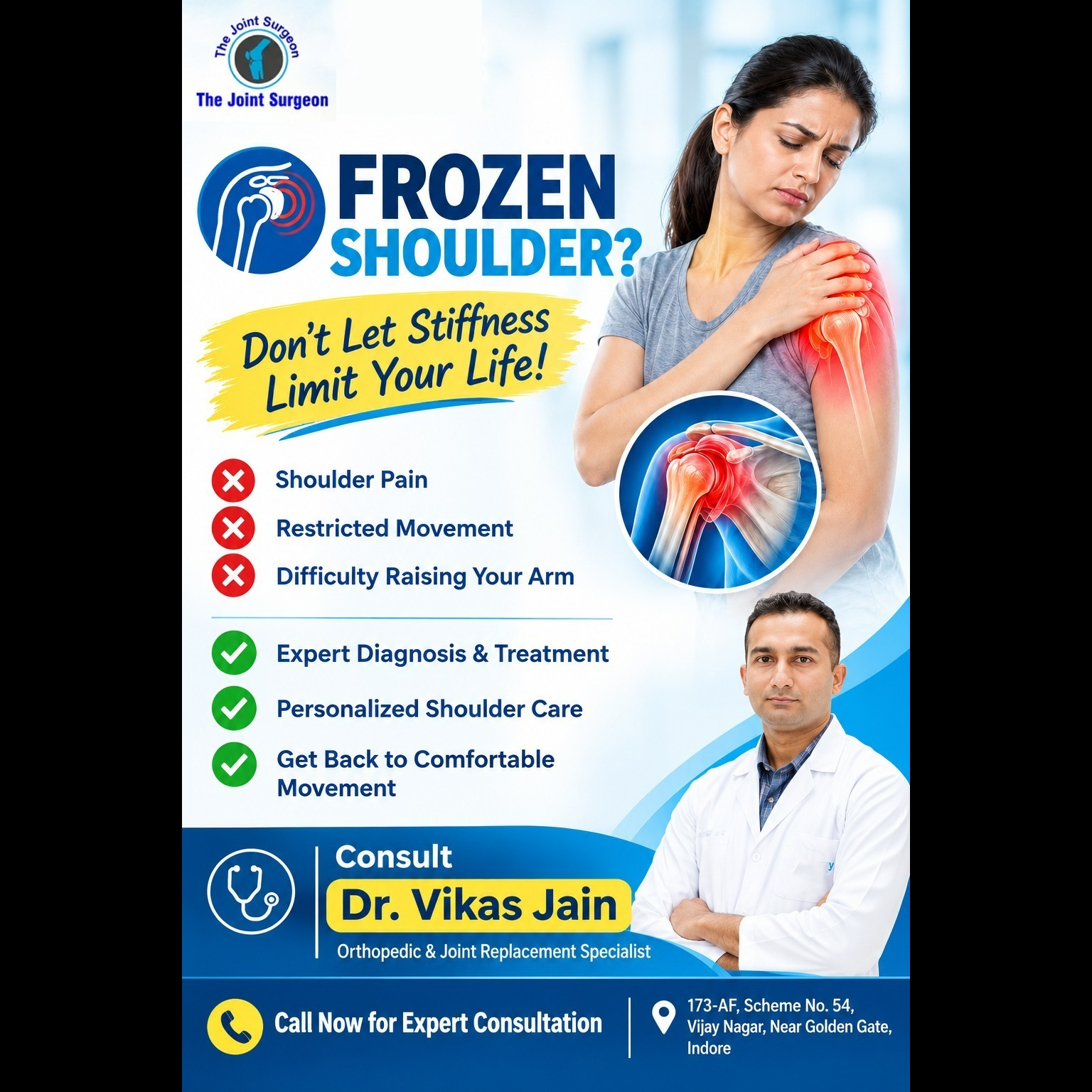
Stiffness and persistent pain in the shoulder can make even simple everyday tasks, such as dressing, combing hair, raising one's head, or sleeping comfortably, difficult. Frozen shoulder, medically known as adhesive capsulitis, is a condition that causes pain, stiffness, and restricted movement in the shoulder joint.
If you're experiencing difficulty moving your shoulder, it's important to consult an experienced orthopedic specialist. Dr. Vikas Jain provides orthopedic consultation and treatment for frozen shoulder in Indore, focusing on identifying the underlying cause, assessing shoulder mobility, and developing a treatment plan tailored to the patient's condition.
With proper diagnosis, guided treatment, and rehabilitation, many patients can gradually improve shoulder movement, reduce discomfort, and regain their ability to perform daily activities.
What is a frozen shoulder?
Frozen shoulder, or adhesive capsulitis, is a condition in which the connective tissue capsule surrounding the shoulder joint becomes thickened, inflamed, and tight. This reduces the space for normal joint movement, causing pain and stiffness.
This condition usually progresses slowly and can worsen over several months. Frozen shoulder typically occurs in people between the ages of 40 and 60 and is more common in people with diabetes or thyroid disorders.
Frozen shoulder can affect one or both shoulders, although both shoulders are less common.
Common Symptoms of Frozen Shoulder
Recognizing the early symptoms of frozen shoulder can help patients seek timely orthopedic evaluation.
Common symptoms include:
* Persistent pain in the shoulder, especially during movement.
* Difficulty raising the arm above the head.
* Stiffness in the shoulder joint.
* Difficulty reaching the arm behind the back.
* Pain when dressing or combing hair.
* Discomfort when sleeping on the affected shoulder.
* Restriction in shoulder rotation and movement.
* Difficulty performing household and professional tasks. If shoulder stiffness persists or interferes with daily activities, it is advisable to consult an orthopedic doctor.
What causes frozen shoulder?
The exact cause of frozen shoulder is not always clear. However, several factors can increase the risk of developing this condition.
1. Diabetes: People with diabetes have a higher risk of developing frozen shoulder. Blood sugar management is an important part of comprehensive care.
2. Thyroid disorders: Hypothyroidism and hyperthyroidism have been linked to an increased risk of adhesive capsulitis.
3. Shoulder injury: Any injury, fracture, or surgery that requires prolonged immobilization of the shoulder can cause stiffness.
4. Prolonged immobilization: Keeping the shoulder inactive for a long time can increase the risk of movement restriction.
5. Age and gender: Frozen shoulder is most commonly seen in people between the ages of 40 and 60, and women are more likely to be diagnosed.
6. Other medical conditions: Certain systemic health conditions can also increase the risk of developing frozen shoulder.
Stages of Frozen Shoulder
Frozen shoulder typically progresses through three stages. Each stage has different symptoms and may require different treatments.
1. Freezing Stage
During this stage, shoulder pain gradually increases, and movement becomes more difficult. The pain may be worse, especially at night. This stage can last from several weeks to months.
2. Frozen Stage
Pain may subside, but shoulder stiffness increases. Due to reduced shoulder movement, patients often have difficulty performing daily activities.
3. Thawing Stage
During this stage, shoulder movement gradually improves. Stiffness begins to decrease, and patients may regain flexibility over time.
Recovery varies from person to person and may take several months or longer.
Diagnosis of Frozen Shoulder by an Orthopedic Specialist
Accurate diagnosis is essential for choosing the right treatment. Dr. Vikas Jain examines the patient's condition to understand the shoulder pain, stiffness, mobility issues, and a significant medical history.
The diagnostic process may include:
* Medical history: How long the pain has lasted, previous injuries, diabetes, thyroid problems, and other health conditions.
* Physical examination: Assessing the active and passive movements of the shoulder.
* Range of motion assessment: Assessing the ability to lift, rotate, and move the shoulder.
* Imaging tests: An X-ray may be recommended to rule out arthritis or other bone-related problems. An ultrasound or MRI may be considered if necessary to assess surrounding soft tissue damage or rule out other problems.
A proper clinical assessment helps differentiate frozen shoulder from rotator cuff injuries, shoulder arthritis, and other causes of shoulder pain.