
ACL Ligament Injury Specialist in Indore – Dr. Vikas Jain
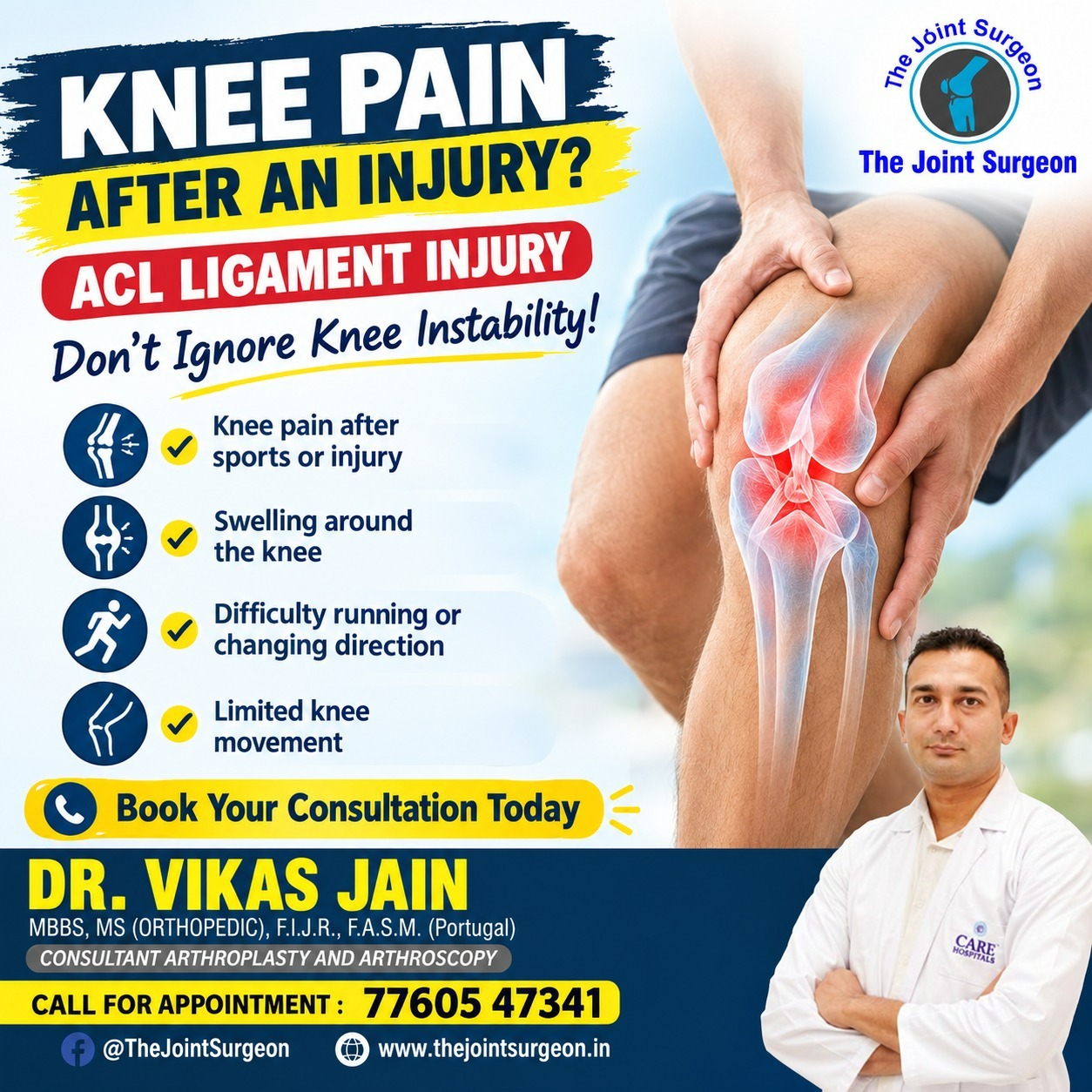
Are you experiencing knee pain, swelling, instability, or difficulty walking after a sports injury or sudden twist? These could be signs of an ACL (anterior cruciate ligament) injury. Consulting an experienced orthopedic specialist can help determine the severity of the injury and develop an appropriate treatment plan.
Dr. Vikas Jain, an orthopedic specialist in Indore, is available to consult patients seeking advice on knee ligament injuries, sports-related knee problems, and ACL injury management. A proper diagnosis is essential because ACL injuries can impact knee stability, movement, and the ability to participate in daily activities.
Whether you injured your knee while playing sports, exercising, running, or accidentally falling, an early medical examination can help you recover.
What is an ACL ligament injury?
The anterior cruciate ligament (ACL) is one of the main ligaments within the knee joint. It connects the thigh bone (femur) to the shin bone (tibia) and helps maintain knee stability.
The ACL plays a vital role in controlling knee extension and rotation stability. This is especially important during activities that involve running, jumping, sudden stops, turning, and changing directions.
An ACL injury occurs when this ligament is overstretched or torn. Depending on the severity, the injury can be described as a mild sprain, a partial tear, or a complete tear.
ACL injuries typically occur during sports such as football, cricket, basketball, badminton, and kabaddi. However, they can also occur during regular physical activities or from accidental falls.
Common Symptoms of an ACL Ligament Injury
Recognizing the symptoms of an ACL injury can help patients seek timely medical attention.
1. Sudden Knee Pain
A person may experience sudden pain after a twisting movement, falling awkwardly, or directly hitting the knee. 2. Knee Swelling
Swelling may occur within a few hours of the injury, sometimes due to bleeding inside the knee joint.
3. Popping Sound
Some people hear or feel a popping sensation when injured. However, this symptom alone does not confirm an ACL tear.
4. Knee Instability
The knee may feel unstable or bend when walking, running, or changing directions.
5. Difficulty Walking
Pain and swelling may make it difficult to put weight on the affected leg or walk comfortably.
6. Restricted Knee Movement
Patients may have difficulty fully bending or straightening the knee.
If you experience significant swelling, severe pain, difficulty bearing weight, or the knee locks, seek immediate medical attention.
What causes ACL ligament injuries?
ACL injuries can be caused by a variety of movements and physical activities. Common causes include:
* A sudden change of direction while running.
* Landing awkwardly after a jump.
* A sudden stop while running.
* A knee twisting while the foot is still on the ground.
* A direct collision or impact during sports.
* A fall or slip during physical activity.
* A sports accident involving the knee joint.
Sports that involve repeated rotation, jumping, and rapid changes of direction can increase the risk of ACL injuries.
Different Grades of ACL Ligament Injuries
ACL injuries are generally classified according to the extent of ligament damage.
Grade 1 – Mild Sprain
The ligament is stretched but remains intact. There may be mild tenderness and swelling in the knee, but a fair amount of stability is maintained.
Grade 2 – Partial ACL Tear
The ligament is slightly torn, and the knee may become less stable. Symptoms may include pain, swelling, and difficulty with certain movements.
Grade 3 – Complete ACL Tear
The ligament is completely torn, causing significant instability in the knee. Some patients may experience difficulty with sports and activities that involve turning or sudden changes in direction. The exact grade of the injury and associated damage must be determined through clinical examination and appropriate imaging.
Diagnosis of an ACL Ligament Injury
If you suspect an ACL injury, it's important to consult an orthopedic doctor to assess knee stability and identify associated injuries.
The diagnostic process may include:
1. Medical History
The doctor may ask how the injury occurred, when symptoms began, and whether there is swelling or instability in the knee.
2. Physical Examination
The knee is assessed for tenderness, swelling, range of motion, and ligament stability. Clinical tests such as the Lackmann test, anterior drawer test, and pivot-shift test may be used if necessary.
3. MRI Scan
An MRI can help diagnose ACL damage and identify associated injuries to the meniscus, cartilage, and other ligaments.
4. X-ray
An X-ray may be recommended to check for fractures or other bone-related injuries. X-rays do not directly reveal an ACL tear.
An accurate diagnosis helps the specialist prescribe the appropriate treatment.